Tuesday, April 19, 2016

Cruise of the Mediterranean Sea and Canary Islands 7: Genoa 2

地中海とカナリヤ諸島クルーズ 7: ジェノバ 2


< 1.  We were a departure from this port just before sunset >
< 1.日没前に出港 >

I introduce the boarding our cruise ship and the departure from this port today.
今日は、クルーズ船への乗船と出港を紹介します。   


< 2.  Genoa Port, by Google Earth >
< 2. ジェノバ港、グーグル・アースより >

The blue frame shows a terminal of MSC Cruises and a Cruise ship.
The red frame shows the area where we went sightseeing today, and it was surrounded by a castle wall in the Middle Ages. 

青枠はMSCクルーズのターミナルとクルーズ船です。
赤枠が今回観光した場所で、中世、城壁に囲まれていた場所です。


< 3.  Finally, we board to our cruise ship >
< 3. いよいよクルーズ船に乗船 >
Central photo:  The old-looking terminal building of MSC Cruises is seen on the left.
Lower photo:  Our Cruise ship.

真中の写真: MSCクルーズの古風なターミナルビルが左手に見えた。
下の写真: これから乗船する船です。


< 4.  Our boarding procedure in the terminal building >
< 4. MSCのターミナルで乗船手続き >
Upper photo:  In the first floor at about 13:00.
We deposit our suitcases here, and these are carried to our room before the evening.

Central photo:  A procedure counter is seen in the backside of the 2nd floor.
There is a sales store of the convenient drink packages before going to the counter.
But, it is not necessary to purchase it hastily here.
Later, we can purchase it in buffet-style restaurant.

Lower photo:  We do the boarding procedure on this counter.
We had to wait in line for a long time, because the most of the passenger should go on board here.
We get the cruise card in exchange for our passport respectively at this counter.
The processing was early.

Our payment in the ship is possible all with this card.
This card serves as our identification and the room key.
The restaurant and table where I have to go for meals is appointed in the card.

上の写真: 13:00頃、1階。
スーツケースなどはここで預け、夕方までに各部屋に運ばれます。

真中の写真: 2階の奥に手続きカウンターが見えます。
カウンターに行く前に、便利なドリンクパッケージの販売所があります。
ここで急いで購入する必要はありません。
後で、ブュッフェなどで購入出来ます。

下の写真: このカウンターで乗船手続きを行います。
乗客の大半が、ここで乗船するはずなので、かなりの行列でした。
このカウンターでパスポートと引き換えにクルーズカードを各自貰います。
処理は早いです。

船内の支払いはこのカード一枚ですべて出来ます。
カードは部屋のキーと身分証明を兼ねています。
カードには食事をするレストランとテーブルが指定されています。


< 5.  Let’s board it!
< 5.さあ乗船! >
Upper photo:  I go across a bridge, and board this huge ship.
Here, I went through a security check, and my card immediately was necessary.

Central photo:  I put our baggage in my room, and went a buffet-style restaurant for a late lunch after 15:00.

Lower photo:  For the emergency drill, we bring a life jacket of our room and have to go to appointed room in time that a broadcast has appointed.
The room for the emergency drill is different in each room, and there is mention at the door of our room.
If you show your card, a person in front of all elevators can tell you where to go.

上の写真: いよいよブリッジを渡り巨大な船に乗船します。
ここで、早速、ボディチェックがあり、カードが必要です。

真中の写真: 部屋に手荷物を置き、15:00過ぎに遅い昼食をブュッフェでとりました。

下の写真: 避難訓練の時間が放送されますので、部屋の救命胴衣を持参して向かいます。
それぞれの部屋により訓練場所が違い、部屋のドアにその記載があります。
カードを見せれば、エレベーターの所で係員が教えてくれます。


< 6.  Introduction of our cruise ship 1 >
< 6.クルーズ船の紹介 1 >

This time, we get on a ship, Fantasia.
It is 333 m in total length, has 14 floors only on the deck for the passenger, and the passenger surpasses 3,000 people.
My first impression is clean, big, and new.

今回、私達が乗る船はファンタジアです。
全長333mで、乗客用デッキだけで14階もあり、乗客は3千名を越えます。
一番の印象は、非常に大きいことと新しく清潔なことです。

Our room was a cabin with balcony in the twelfth-floor.
Cabins of this ship are 11 kinds, and the dimensions of each cabin are further different.
The first impression is open and comfortable room.
I was slightly uneasy due to only using shower, but came to think that it is usefully soon.

私達の部屋は12階のバルコニー付きキャビンでした。
この船のキャビンは11種あり、広さも異なります。
一番の印象は、開放的で快適な部屋でした。
シャワーだけなので少し不安でしたが、やがて便利に思うようになりました。


< 7.  Introduction of our cruise ship 2 >
< 7.クルーズ船の紹介 2 >

This shows standard equipment for passenger of the ship that this MSC Cruises have.
This ship had everything, but I thought that I cannot enjoy it all due to too spacious.

このクルーズ会社の標準的な乗客用装備を示しています。
ここには何でも揃っているが、広くてすべてを楽しむことは出来ない印象でした。


< 8.  Views of Genoa from the cruise ship >
< 8.クルーズ船からジェノバを見る >
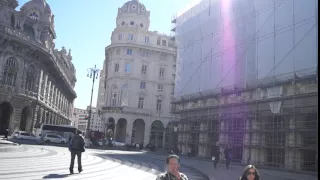
Upper photo:  The cityscape to the right side from the center is the place that we went sightseeing today.

上の写真: 中央から右手の町並みが、今日、観光した場所です。


This video footage is 15 seconds.
15秒のビデオ映像です。


< 9.  We are departure from Genoa soon >
< 9.いよいよ出港 >

The departure was 17 o’clock, and many passengers regretted at parting.
Before long, I noticed that we had been surrounded by many foreign passengers.

出港は17:00で、多くの乗客が別れを惜しんでいました。
いつの間にか、私達は外人乗客に囲まれていました。


< 10.  Departure >
< 10. 出港! >


This video footage is 18 seconds.

We part from Genoa, go to Barcelona tomorrow, and we are departure to long cruise coming back to Italy, Rome ten days later.
I introduce the details of the cruise ship later.
This continues next time.

18秒のビデオ映像です。

ジェノバと別れ、明日はバルセロナで、10日後にイタリア、ローマに戻る長いクルーズへと出発です。
クルーズ船内の詳細は後に紹介します。

次回に続きます。


Sunday, April 17, 2016

Cruise of the Mediterranean Sea and Canary Islands 6: Genoa 1


< 1. Piazza De Ferrari >
< 1.フェッラーリ広場 >

I introduce Genoa.
There was the remnant which Genoa played an active part as a Maritime nation in those days.
After this sightseeing, we got on a Cruise ship and departed from this port in the early evening.

今日は、ジェノバの町を紹介します。
ここには、かつて海洋都市国家として活躍した当時の姿がありました。
観光後、この港からクルーズ船に乗って、夕方出港しました。     


< 2.  Maps of Genoa >
< 2. ジェノバの地図 >
The upper part of two maps shows the north.

Upper photo:  A yellow line shows the route from Milan, and a blue line does the sea route of our Cruise ship.
A red frame shows the range of the lower map.

Lower map:  The red line shows our sightseeing route by foot, and we started in S and finished at F.
The distance on foot is approximately 1.5km.
The sightseeing took approximately one hour from 11:30, on March 3, 2016.

2枚の地図の上側は北です。

上の地図: 黄線がミラノから来たルート、青線がクルーズ船の出港を示す。
赤い方形が下の地図の範囲です。

下の地図: 赤線が徒歩ルートで、Sから始めてFで終わりました。
徒歩距離は約1.5kmです。
観光は、2016年3月3日、11:30から1時間ほどでした。


< 3.  A house of Columbus >
< 3. コロンブスの家 >

Upper photo:  We just arrived at Genoa by bus.
Central photo:  A house of Columbus.  
This building was restored on the remains of his birthplace.

上の写真: バスでジェノバに到着。
真中の写真: コロンブスの家。これは生家跡の上に復元されたものです。
下の写真: 12世紀の教会の回廊を復元したもの。


< 4.  Gate of the Middle Ages, “Porta Soprana” >
< 4.中世の門「Porta Soprana」 >

Upper photo:  The obverse and reverse sides of the gate.
There was the castle wall that surrounded the mountainside of Genoa, and a gate at here once.
This gate was again restored as thing made between the 9th century and the 12th century.

Lower photo:  We passed through the gate and went to Piazza De Ferrari.
The dome roof of a cathedral was seen over there.

上の写真: 城門の表と裏。
かつてジェノバの山側を囲む城壁があり、ここに門があった。
これは9世紀から12世紀に作られた門を復元したものです。

下の写真: 門を抜けて、フェッラーリ広場に向かう。
向こうに、大聖堂のドーム屋根が見える。


< 5.  Piazza De Ferrari >
< 5.フェッラーリ広場 >

Upper photo:  The center is a securities exchange.
Central photo:  The center is an art academy and art museum.
Lower photo:  The right is an opera house.

This open space is the center of Genoa and also is the center of finance and business.


A video footage of Piazza De Ferrari is 13 seconds.

上の写真: 中央が証券取引所。
真中の写真: 中央が美術学校と美術館。
下の写真: 右がオペラハウス。

この広場はジェノバの中心であり、ここは金融とビジネスの中心地です。

13秒のビデオ映像です。


< 6.  Via Garibaldi >
< 6.ガリバルディ通り >
This street and palaces “Palazzo” is World Heritage Sites.
The decoration of these fronts was excellent, but when we entered it, I was amazed.

In the 16th century, Genoa gave up a declining Mediterranean trade, and financed Spain progressing to the Age of Discovery, and then Genoa accomplished revival.
In the times of the prosperity, the merchants provided their homes as the guesthouse that they invite noble people in.
These guesthouses have lined this street.

この通りと「パラッツォ」宮殿群は世界遺産です。
表の飾りも立派なのですが、中に入って驚愕しました。

16世紀、ジェノバは翳ってきた地中海貿易に見切りを付け、大航海時代に向かうスペインへの融資で復興を遂げた。
その隆盛の時代に、商人達が自宅を高貴な人々を迎える迎賓館として提供した。
この迎賓館がこの通りに並んでいる。


< 7.  One of the guesthouses, “Palazzo Carrega-Cataldi” 1 >
< 7.迎賓館の一つ「Palazzo Carrega-Cataldi」1 >

Upper photo:  Going up the stairs.
Lower photo:  Overlooking the first floor from the upper part of stairs.

This is used as the chamber of commerce now.

上の写真: 階段を上って2階に。
下の写真: 階段の上部から1階を見下ろす。

現在、商工会議所として使われている。


< 8.  “Palazzo Carrega-Cataldi” 2 >
< 8.「Palazzo Carrega-Cataldi」2 >
Upper photo:  The first-floor ceiling.
Lower photo:  The second floor.

上の写真: 1階の天井。
下の写真: 2階。


< 9. “Palazzo Carrega-Cataldi” 3
< 9.「Palazzo Carrega-Cataldi」3 >
Upper photo:  Rooms around a courtyard.
Lower photo:  A conference room. 
It was redecorated by rococo style with many gold in the 18th century.
When I looked at it, I just remembered the impression of a time I saw the Pilgrimage Church of Wies in Germany.

上の写真: 中庭を囲む部屋。
下の写真: 会議室。
18世紀、金を多用したロココ様式に改装された。
私は、ドイツのヴィースの巡礼教会を見たときの感動が蘇った。


< 10.  “Palazzo Carrega-Cataldi” 4 >
< 10.「Palazzo Carrega-Cataldi」4  >
The expansion of the conference room. 
会議室の拡大。


< 11. Other palaces >
< 11. 他の宮殿 >
Central photo:  Entrance hall of one of the palaces, “Palazzo Podestà”.
Lower photo:  The courtyard is right behind the entrance hall.


A video footage of Via Garibaldi is 13 seconds.

On the next time, I introduce the boarding a Cruise ship and the departure from this port.

真中の写真: 宮殿の一つ「Palazzo Podestà」の玄関ホール。
下の写真: 「Palazzo Podestà」の玄関ホールを抜けた先にある中庭。

13秒のビデオ映像です。

次回は、クルーズ船への乗船と出港を紹介します。


Saturday, April 16, 2016

何か変ですよ 40: 見たくない、知りたくないこと


< 1.震災を受けた熊本城 >

今日は、日本で起きている不可思議な現象を追います。
それは将来訪れる可能性のある身と経済の危険についてです。
人は往々にして見たくないものにはそっぽを向くようです。


熊本地震との関わり
2016年4月14日に発生した熊本地震は震度7で、非常に強い揺れでした。

気になるのは、この時発生した最大加速度が1580ガルと言うことです。
例えば、この値は鹿児島県川内原発の耐震性基準620ガルの2.5倍です。
この基準は福島事故を受けて372ガルから引き上げられた。

ここで気づいて頂きたいことは、加速度が基準値を超えれば原子炉を破壊することです。
例えば、地震の加速度「ガル」が2.5倍になると原子炉に想定の2.5倍の力が働きます。
これは配管から容器、燃料棒などあらゆる部品を破壊する力が2.5倍になることを意味します。


< 2. 原子炉の破壊 >
左図: 原子炉容器と配管の振動シミュレーション。
赤部が強度的に弱い所で、加速度が増えるとこの部分から破壊が進む。

右図: 福島原発事故。

日本の地震で2008年の宮城岩手内陸地震の4022ガルが最大でした(基準の6.5倍)。
重要なのは、マグニチュードや震度、地震の深さではなく原子炉に作用する加速度なのです。
揺れの時間は瞬間であっても破壊します。

日本列島では、いつどこで、どれだけの加速度の地震が発生するか分からないのです。


< 3. 失業率の推移 >

高卒の就職状況との関わり
現在、私は高校で教えており、就職状況の好転は歓迎すべきことです。
しかし、気になることがある。
それは生徒達がアバノミクスのおかげで良くなっていると思い込んでいることです。
事実は、そんな楽天的なものではなく将来に不安がある。

先ず、失業率が低下している理由を見ましょう。


< 4. 日本の人口推移 >

このグラフから厳密な説明は出来ないのですが、その理由は理解しやすい。
15~64歳人口(棒グラフの青色)の低下は14歳以下人口(緑色)の低下よりはるかに急激です。
これは高校から大学までの学卒の就職希望者より、団塊世代の退職の方が多いことに関連しています。
つまり、このギャップが学卒の就職を有利にさせ、失業率の低下になっているのです。

それでは、なぜ今起きたかと言うと、主に改正高年齢者雇用安定法で企業の定年が5年ほど遅れたことによるのです。
つまり今回だけ後回しになっただけなのです。

具体的な数字で確認しましょう。
2010年度で団塊世代人口(61~63才)は669万人です。
退職が4年遅れるとして、2014年度の就職可能な若年人口(20~22才)は373万人です。注釈1
3年間の需給の差は296万人不足、退職者が圧倒的なのです。

2015年の全学卒者(高校、専修学校、高専、短大、大学)232万で、就職希望者92万人です。
2010年度の60歳人口230万人、これが5年後に退職するとしたら、その需給ギャップは138万人不足です。
これが1年間で起きたかもしれないのです。

実際は、他の世代や女性の就労等で、全就業者数はわずかながら増加し、定年延長で日本社会は急場を凌いでいます。
しかし今、人手不足が高齢者の多い中小企業を直撃しているはずです。

実は、問題はこれからなのです。
グラフのような生産年齢人口の減少を食い止めない限り、日本は景気後退を深めるでしょう。
欧米は、主に移民労働者の受け入れでこれを防いで来ました。

理由は簡単で、労働人口が減り、国民所得と需要が減り、総労働人口の減少分に応じて企業は規模の縮小に向かわざるを得ない。
ここで企業の淘汰が起こり、倒産が増えます。
この現象は、一人当たりのGDPが変わらなくても、減少の過渡期において起きます。

今、大事なことは、皆さん一人ひとりが他人任せでなく、社会で起きていることを直視することです。


注釈1: 就職可能な人口の20~22才は、私が目安に設定した年齢で、各種学卒の比で決めました。


Thursday, April 14, 2016

Bring peace to the Middle East! 5:   Outline of conflicts in the Middle East 2


中東に平和を! 5: 中東の紛争のあらまし 2        


Today, we look at the factors of the Middle Eastern side causing the expansion of the conflict.
今日は、紛争拡大を招いている中東の要因を見ます。


Flash point of internal opposition
In this area, there are countries of republican institutions, but most are monarchy or military government.
If the people demand reform, they must conflict with the despotic government, so the large-scale demonstration such as "the Arab Spring" is at the beginning.

There were invariably the severely oppressing and White Terror by Israel or the Arabic governments before the attack and suicide bombing by the radicals increased in each place.
Which started the fight first is always ambiguous, but the powerless people receive overwhelming violence by them.
There is full of hatred and distrust against each other, and it makes a situation that they cannot talk.
This situation began around the middle of the 20th century and it continues turning worse.


対立の火種
この地域には共和制の国もあるが、ほとんどが王制か軍事政権です。
国民は改革を求めるなら、この強権的な政府と抗争することになり、「アラブの春」のような大規模デモによる訴えは始めてだった。

各地で過激派の攻撃や自爆テロが増大する前に、必ずイスラエルやアラブ政府による大弾圧や白色テロがあった。
どちらが先に手を出したかは微妙だが、非力な民衆側は圧倒的な暴力を受けることになる。
両者には不信と憎しみが渦巻き、対話不能な状況がある。
この状況はおおよそ20世紀中頃から始まり、悪化し続けている。


There is other flash point of internal opposition, too
As for ethnic antagonism, there is not only an antagonism between Palestine and Israel, but also it among Arab and Turkey and Iran, and furthermore there is a struggle for independence of Kurd.

As for the religion, there is an antagonism between Shiite and Sunni Muslims, and it between Muslim and Christian in Lebanon.

Thus, each country performs a diversion and a trick to the adverse country for a territory or petroleum in addition to the mentioned antagonism, and it develops into an armed power conflict at last
The most skillful with it is maybe Israel and the Mossad (Israel’s intelligence agency).

対立の火種は他にもある。
民族対立はパレスチナとイスラエルの間だけでなく、アラブとトルコ、イランにもあり、さらにクルド人の独立闘争がある。

宗教ではイスラム教のシーア派とスンニ派の対立、レバノンでのイスラム教徒とキリスト教徒の対立もある。

こうして各国は上記対立に加え、領土や石油が絡み、相手国に牽制や謀略を行い、遂には武力紛争に発展する。
最も巧みなのがイスラエルであり、モサド(イスラエル諜報特務庁)でしょう。


The reason why radicals increased

As the First Middle East War and the Afghan Civil War, in the Islamic world, there is a tradition that volunteer soldiers participate in a war across a border and Islamic tribes support it.

In addition, a thought of back to the source also has been in a part of Islam, and this has applied for the strict interpretation of the doctrine.
When fighting against an invader (enemy), a person of power of the Islamic world often used a word " Jihad " historically.
The radicals borrow these by preference.

There are two reasons why this trend increases currently.
One is that oil-producing countries of the monarchy support the radicals operating in other countries.
In particular, Saudi Arabia has a deep connection with a radical since the birth of the nation.
Another one is that the whole Arab have expected for the Islamic Renaissance since about 1980, as reaction in despair about the policy (modernization, westernization) of the previous nationalism.

過激派が増加した理由
第一次中東戦争やアフガニスタン紛争のように、イスラム圏では同朋が侵略されると、義勇兵が国境を越えて参戦し、部族が支援する伝統がある。

また、イスラム教にも原点回帰の思想が一部にあり、これが教理の厳格な解釈を求めている。
「聖戦」は、歴史的にイスラム圏の権力者などにより侵略者(敵)と戦う時に発せられることがあった。
これらを過激派が都合よく借用している。

現在、この風潮が勢力を増している理由が二つある。
一つは、王制の石油産出国が他国で活動する過激派を支援していることです。
特にサウジアラビアは国家誕生時から過激派と深い繋がりがある。

もう一つは、1980年頃より、アラブ全体で、それまでの民族主義の政策(近代化、欧米化)に失望し、反動としてイスラム復興に期待するようになったことです。


Further geopolitical reason

The Middle East was a strategic point linking the east and west from ancient times, and became a ground of a struggle for ruling power due to being the point of contact of each continent.
Furthermore, petroleum and Palestinian issue affected it, so Europe, the Soviet Union, and the United States increased the interference and support.
Thus, The most countries of the Middle East nears the top of country importing weapons in the world, excepting large countries such as China, and became the major consuming areas of weapons.

Over the past century, oil-producing countries like Saudi Arabia and Gulf countries is enabling the maintenance of monarchy and reinforcement of armaments, by keeping close friendship with European nations and the United States.
This becomes a reason why the radicals increased and Arab countries split.

さらに地政学的な理由がある
古来より、中東は東西を結ぶ要衝の地で、各大陸の接点であったことにより覇権争いの地となった。
さらに石油とパレスチナ問題が絡み欧州・ソ連・米国の干渉と支援が増大した。
こうして中東各国は、中国などの大国を除けば武器輸入の上位になり、一大消費地となった。

この1世紀の間、サウジアラビアや湾岸諸国等の石油産出国は欧米と親密さを保ちながら、王制の維持と軍備強化を可能にしている。
このことが、過激派の増殖とアラブが分裂する理由にもなっている。

Finally

It becomes a remote cause of the conflict of the Middle East in the early 20th century that a Jew began settling in Jerusalem.
Originally, Arab was nomad in desert, and had not border and nation awareness.
However, suddenly the borders of straight lines were drawn, their ground was divided in pieces, and they were imposed king and the territory upon.
This was an ending of the colonial policy of Britain and France that began at the middle of the 19th century.

This continues next time.

最後に
この地の紛争は、20世紀始めに、ユダヤ人がエルサレムに入植を始めたことが遠因になっている。
元来、アラブは砂漠の遊牧民であり、国境や国民意識は無かった。
それが突如、直線の国境を引かれ分割され、王や領土をあてがわれた。
これは19世紀中頃に始まる英仏の植民地政策の結末だった。


次回に続きます。


Monday, April 11, 2016

Cruise of the Mediterranean Sea and Canary Islands 5: Scenery between Milan and Genoa

地中海とカナリヤ諸島クルーズ 5: ミラノからジェノバへ


*

Please enjoy the drive between Milan and Genoa today.
The view out of our bus was splendid scenery of northern Italy.

今日は、皆さんにミラノからジェノバまでのドライブを楽しんでもらいます。
素晴らしいイタリア北部の景観が続きます。


< 2.  The route of our bus >
< 2. バスのルート >

The upper photo is the north.
The yellow mark is our hotel, Novotel Milan Malpensa Airport.
The red line is the route from Milan to Genoa, and the distance is 140km.

写真上部は北です。
黄マークは宿泊地で、マルペンサ空港近くのホテル、ノボテルです。
赤線はミラノからジェノバへのルートで、距離は140kmです。


< 3.  Around our hotel 1 >
< 3. ホテル周辺 1 >
Upper photo:  Our hotel in the left side.
Other photos:  A quiet residential area around it.

We walked around nearby it in the early morning, about 7:00 on March 3, 2016. 
When we took a walk, watchdogs of each house begun to bark.
We met several people going to work.

上の写真: 左手にホテルが見えます。
他の写真: 周辺の閑静な住宅街です。

2016年3月3日、朝7時頃、散策しました。
立派な住宅が続くのですが、散歩していると各家から番犬が吠え出しました。
出勤する数人に出会いました。


< 4.  Around our hotel 2 >
< 4.ホテルの周辺 2 >

The opposite side of the residential area was a natural park.
住宅の反対側は、自然公園になっていました。


< 5.  Views from the bus window 1
< 5.車窓から 1 >

Our bus left the hotel at 9:00 and arrived at Genoa after 11:00.
I took these photos (No. 5 - 9) in the right side of the bus, so I looked at mainly the west side.
These photos are arranged in order of photography time.

Snowcapped Alps and fertile farmland spread out before us.
Cereal culture (corn, rice, etc.) and livestock farming seem to be popular here.

私たちのバスはホテルを9時に出発して11時過ぎにはジェノバに到着しました。
写真(No.5から9)は進行方向右側(主に西側)を撮りました。
写真は撮影時間の順番に並んでいます。      

雪を戴いたアルプスと肥沃な平野が広がっています。
穀物栽培(トウモロコシ、米など)と牧畜が盛んなようです。


< 6.  Views from the bus window 2
< 6.車窓から 2 >


< 7.  Views from the bus window 3
< 7.車窓から 3 >

この川はイタリア最長のポー川だと思います。
この辺りから、アルプスは遠くなっていきます。


< 8.  Views from the bus window 4
< 8.車窓から 4 >


< 9.  Views from the bus window 5
< 9.車窓から 5 >


< 10.  Views from the bus window 6
< 10.車窓から 6 >
I took these pictures on the way to Milan from Genoa, at about 9:00 A.M. on March 14.
I took them in the right side of the bus, so I looked at mainly the east side.

この写真は、ジェノバからミラノへの帰路、3月14日の午前中9時半頃、進行方向右側(主に東側)を撮影したものです。


< 11.  Views from the bus window 7
< 11.車窓から 7 >

We approached mountains with approaching Genoa.

No. 11 and 12 photos include photos that I took when I went to and came back from Genoa.
But these photos are arranged in order of going ahead to Genoa.

ジェノバに近づくと、山が近づいて来ました。

No.11と12の写真は、往復時の撮影が混じっていますが、写真の並びはジェノバに向かっているように配置しています。


< 12.  Views from the bus window 8
< 12. 車窓から 8 >

I saw the Mediterranean Sea that glistened in the sunlight below my eyes when I got over the mountains.
The city area of Genoa spreads out on the left side.

This continues to next time.

山を越えると、眼下に陽光輝く地中海が見えて来ました。
左側にジェノバの市街地が広がっています。

次回に続きます